This site uses cookies, as explained in our Privacy & Cookie Policy. If you use this site without adjusting your cookies settings, you agree to our use of cookies.
I Agree

Jomtien Beach facelift

Posted on June 26th, 2015

Jomtien Beach’s 270-million-baht facelift is underway and officials promise that, two years from now, it will look a lot better than it does currently.

n16improve-1

Contractors have begun taking out trees and ripping up sidewalks, starting from the Dongtan police box to Chaiyapruek Road, an area of 40,000 sq. meters.

The work is being carried out by Nong Nooch Land and Garden Design Co., an arm of the award-winning Najomtien garden and elephant park, in tandem with the Pattaya Engineering Department.

Estimated at 273 million baht and lasting until March 2017, the project calls for resurfacing of sidewalks; planting trees; building sports, recreation, water amusements; adding a playground, public rest area, and a viewpoint. There will be a beach volleyball court with grandstands on two sides, four-meter-wide stairs running down to the beach and a tiled beach footpath.

In addition, new parking facilities, public restrooms, a police substation, and other facilities will be constructed.

Thailand visitor arrivals surge 25% in Jan-May 2015

Posted on June 25th, 2015

Visitor arrivals to Thailand totalled 12.4 million between January-May 2015, up 25% over the same period of 2014, and are on track to cross the estimated 28-million projection for the entire year.

Thailand_visitor_arrivals-02

According to the latest figures released by the Department of Tourism, Ministry of Tourism and Sports, the top five source markets in January-May 2015 were China (3,273,695), Malaysia (1,397,241), Japan (575,186) Korea (546,520), and Lao PDR. (459,225).

he Ministry of Tourism and Sports reported that the total arrivals of 12,448,641 were an increase of 24.72% over January-May 2014. They generated 592.9 billion Baht in tourism income, up 25.13% over the same period.

The Ministry is projecting total earnings from tourism to hit the 2015 target of 2.2 trillion Baht, comprising of 1.4 trillion Baht from international tourism and 800 billion Baht from domestic tourism.

In May alone, Thailand welcomed 2,309,250 tourists, an increase of 38.21% over May 2014, and 18.79% over May 2013. It was also the highest monthly growth for that month, as compared with May 2014 (1,670,860), May 2013 (1,943,968), and May 2012 (1,546,888).

By region, strong growth was reported in arrivals from East Asia, South Asia, the Middle East and America. Only the European market showed a decline, primarily because of the decline in arrivals from Russia.

Analysis of visitor expenditure in the January-May 2015 period indicated that the top spenders were Chinese tourists (156.839 billion Baht), followed by Malaysian tourists (33.092 billion Baht), Russians (29.021 billion Baht), the UK (27.949 billion Baht) and the U.S. (25.047 billion Baht).

The top-spending per trip were tourists from Israel, who spent an average of 84,995 Baht/person/trip, followed by Sweden (78,177 Baht/person/trip), Canada (78,010 Baht/person/trip), Switzerland (75,893 Baht/person/trip), and Brazil (75,533 Baht/person/trip).

It indicated that the policy to better promote dispersal of visitor arrivals was also producing results, thanks to the promotion of the “12 Hidden Gems” (12 provinces that tourists should not miss).

Of these 12 provinces, the highest hotel occupancy rate in April 2015 was recorded by Nakhon Si Thammarat (59.19%) in South Thailand, followed by Trang, Trat, Lampang Chumphon, Samut Songkram, Chanthaburi, Nan, Buri Ram, Ratchaburi, Phetchabun and Loei provinces. The top 3 provinces with the highest occupancy growth were Lampang, Nakhon Si Thammarat and Nan.

Buri Ram province reported the highest tourism income with 3.666 billion Baht, followed by Nakhon Si Thammarat, Trat, Trang, Chumphon, Chanthaburi, Phetchabun, Loei, Lampang, Nan, Ratchaburi and Samut Songkram. The top 3 provinces with the highest growth rate in tourism income were Lampang, Nan and Loei.

During January – April 2015, the most visited provinces were Bangkok (18,137,860), followed by Nakhon Ratchasima (5,481,327), Phuket (5,337,616), Chon Buri (4,862,017), and Chiang Mai (2,771,407).

Asia-Pacific to lead world air traffic by 2034

Posted on June 23rd, 2015

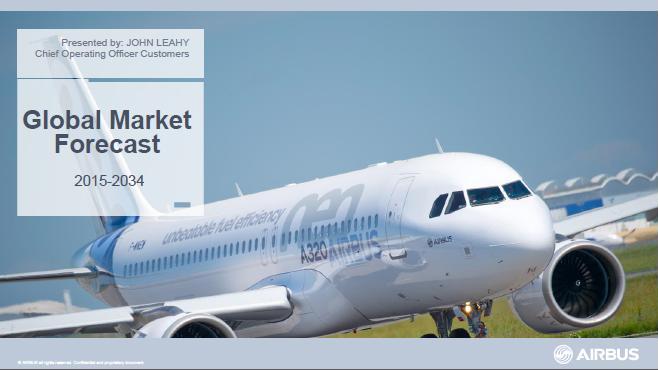
In the next 20 years (2015-2034), according to Airbus’ Global Market Forecast, global passenger traffic will grow at an average 4.6% a year, driving a need for some 32,600 new aircraft above 100 seats (31,800 passenger and 800 freighters greater than 10 tonnes) worth $4.9 trillion.

airbus

By 2034, passenger and freighter fleets will more than double from today’s 19,000 aircraft to 38,500. Some 13,100 passenger and freighter aircraft will be replaced with more fuel efficient types.

Emerging economies which collectively account for six billion people, are the real engines of worldwide traffic growth. They will grow at 5.8% per year compared to more advanced economies, like those in Western Europe or North America, that are forecast to grow collectively at 3.8%.

Economic growth rates in emerging economies such as China, India, Middle East, Africa and Latin America will exceed the world average. A knock-on effect is that middle classes will double to almost 5 billion people.

The tendency to travel by air is increasing. In today’s emerging economies, 25% of the population take one trip per year, and this will increase sharply to 74% by 2034. In advanced economies, such as North America, the tendency to travel will exceed two trips per year.

“Asia-Pacific will lead in world traffic by 2034 and China will be the world’s biggest aviation market within 10 years, and clearly Asia and emerging markets are the catalyst for strong air traffic growth,” said John Leahy, Airbus Chief Operating Officer, Customers. “Today, we are ramping up production of the A350 XWB and we are studying further production rate increases beyond rate 50 for single aisle aircraft to meet the increasing demand for air transportation.”

Long-haul traffic will increasingly be to, from or between aviation mega-cities, rising from 90% (0.9 million passengers a day) today to 95% (2.3 million passengers a day) by 2034. Aviation mega-cities are centers of urbanisation and wealth creation and will increase from 47 to 91 cities by 2034 with 35% of World GDP centered there. These mega cities are already served well by air transportation and the existing route network will accommodate 70% of all traffic growth between now and 2034.

In the widebody market, Airbus forecasts a trend toward higher capacity aircraft on long-haul and an increasingly wide range of regional and domestic sectors. As a result, Airbus forecasts a requirement for some 9,600 widebody passenger and freighter aircraft over the next 20 years, valued at some US$2.7 trillion. This represents 30% of all new aircraft deliveries and 55% by value. Airbus will be especially well placed to win a leading share of the widebody market, with the A330, A350 andA380 representing the most modern and comprehensive product line available today from 200 to over 500 seats.

In the single aisle market, where the A320 Family and the latest generation A320neo Family are firmly established as the global market leaders, the latest Airbus forecast sees a requirement for nearly 23,000 new aircraft worth $2.2 trillion over the next 20 years, an increase of nearly 1,000 aircraft compared to the previous forecast, representing 70% of all new units and 45% of the value of all deliveries.

Globally traffic growth has led to average aircraft size ‘growing’ by 46% since the 1980s with airlines selecting larger aircraft or up-sizing existing backlogs. Larger aircraft like the A380 combined with higher load factors make the most efficient use of limited slots at airports and contribute to rising passenger numbers without additional flights as confirmed by London’s Heathrow Airport. A focus on sustainable growth has enabled fuel burn and noise reductions of at least 70% in the last 40 years and this trend continues with innovations like the A320neo, the A330neo, the A380 and the A350 XWB.

The changing face of Phuket’s tourism industry

Posted on June 22nd, 2015

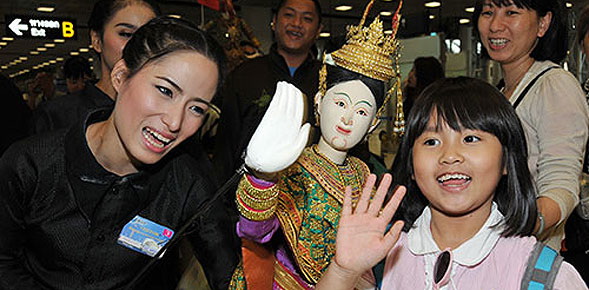
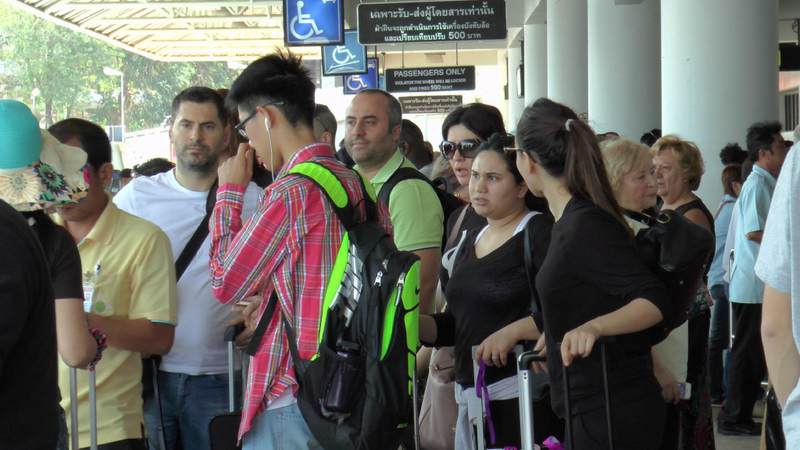
With the number of tourists visiting Phuket increasing year after year, it has become common knowledge that people from all over the world, at one time or another, have chosen this “paradise island” as their preferred holiday destination. Noticeably in recent years, the number of Chinese tourists has increased, as has the number of Russian visitors.

tourists

Previous core source markets ran the gamut from Australia to the UK, the US, Western Europe, South Korea, Malaysia and elsewhere in Asia. Shifting with the world’s winds of change, Thailand’s tourism promotion officials continue to seek out newer, lucrative markets. In the latest notable campaign, The Phuket Tourist Association have joined the “Amazing Road Show to Kazakhstan 2015”.

Vice President of the Phuket Tourist Association Bhuritt Maswongssa said that tens of thousands of Kazakhs travel to Phuket each year, but that most of them come to the island in the high season by charter flights, as no direct flights are available at present.

But many tourism stakeholders remain sceptical about this latest campaign, which echoes similar drives in recent years pushing for “lucrative” tourists from India and Middle Eastern countries.

Indeed, in light of the decline of traditional long-haul markets, the Thai government has realized the potential in short-haul markets, and have already begun to cash in to ensure growth projections remain on target.

Tourists from East Asia – including Asean – made up 60 per cent of all tourists to the kingdom in March, according to a report from the Tourism Department. That represents a 55pc jump year-on-year. This is in contrast to European markets, which made up a fifth of all tourists, about a 15pc decline y-o-y.

Leading the pack, Chinese visitors now account for about a fifth of all foreign travellers to the kingdom, with the arrivals doubling year-on-year.

The dialogue and debate of “quality vs quantity” continues. And to gauge perceptions of readers, The Phuket News’ latest poll asks readers one simple question: “Where’s your preferred foreign tourist from?”

Tourism Associations of Phuket and Samui seek direct flights with Kazakhstan

Posted on June 15th, 2015

The Tourism Associations of Phuket Province and Surat Thani’s Samui Island, will join the “Amazing Road Show to Kazakhstan 2015” organized by the Tourism Authority of Thailand in the Kazakh cities of Almaty and Astana from 15 to 20 June in order to open new tourist markets.

1416215566_1

Vice President of the Phuket Tourism Association Bhuritt Maswongssa said that tens of thousands of Kazakhs travelled to Phuket each year. Most of them come to the island in the high season, by charter flights as no direct flight is available at present.

If an official effort to open direct flights between the two countries is successful, it will definitely raise the number of tourist arrivals from Kazakhstan, Mr. Bhuritt said, adding that a direct flight would also promote a year-round tourism as it will motivate more Kazakhs to visit Thailand in the low season.

According to Mr. Bhuritt, representatives of the Phuket Tourism Association will meet with CEOs of Air Astana, the national airline of Kazakhstan, on 17 June to discuss a possibility of opening a Phuket-Astana direct flight.

On 19 June, Thai delegates are scheduled to pay a courtesy call on Kazakh Deputy Minister of Foreign Affairs and Tourism in order to exchange views and information about their tourism industry and future cooperation.

Sabre Releases New Travel Trend Report: “The Future of Hotel Booking – A Guide to Hotel Retailing”

Posted on June 12th, 2015

Sabre Corporation released a new travel trend report today that outlines a clear path to help hoteliers successfully retail to modern travelers.

untitled


Sabre’s report, The Future of Hotel Booking – A Guide to Hotel Retailing, explores recent technological innovations within retail, tech, media and travel industries and offers practical, actionable recommendations to help hotels apply these practices to a successful retailing strategy. The report identifies 10 distinct trends powered by technology within three key focus areas – World as Media, Intimate Intelligence and Instant Service – and examines their applications to the hospitality industry.

The explosion of consumer-facing technology services has multiplied the paths to purchase and inundated consumers with information from price comparisons and reviews to promotions and deals. While this rapidly expanding travel marketplace is an advantage to travelers, it presents a challenge for hotel brands looking to connect with their guests in a meaningful way, particularly when it comes to booking a stay. As a result, hotels must develop retailing strategies across channels including online, social media, mobile apps and aggregation websites to meet connected travelers’ growing demand for interactive, personal and immediate service and offerings.

“Technology presents the single largest untapped opportunity in the hospitality industry today,” said Alex Alt, president of Sabre Hospitality Solutions. “The goal of this report is to help hotel owners, operators and brands leverage the retailing best practices of other industries into successful strategies to grow revenue and cultivate loyalty.”

The report’s key findings on hotel retailing success include:

  • Convert through context – Whether offering deals or perks at the right moment or providing relevant follow-ups or reminders, technology increases conversion rates by capitalizing on moments when travelers are more inclined to complete a transaction.
  • Reduce friction – Technology that identifies pertinent booking details, uses known data to auto-fill forms or creates one-click transactions can close the gap between discovery and purchase, creating a smoother booking process.
  • Sync the cross-channel experience – Integrated technology systems can share data across channels and devices so travelers have a unified and consistent experience at every stage of the purchase path, regardless of where they book.
  • Help guests envision the ideal trip – Virtual reality and live-streaming platforms allow hotel brands to immerse their guests in the sights, sounds and feel of a destination before booking.
  • Use customer data and preferences to treat guests like old friends – Every interaction that a customer has with a brand’s digital or physical property gives the hotel insights to uniquely tailor every touch point with that individual guest.

Sabre solicited input from some of its hotel customers in preparing the report. Hotel operators confirmed their desire to take a customer-centric approach to retailing:

Kristie Goshow, senior vice president, commercial – Viceroy Hotels & Resorts commented on the importance of an omni-channel strategy in achieving Viceroy’s retail goals. “Our goal is to engage consumers on their path from discovery to purchase. We must sell the way our customers wish to buy and ultimately, that means we need to distribute ourselves ‘brilliantly’ across all consumer facing touch points,” said Goshow.

Kimpton Hotels & Restaurants Distribution Director Nadine Pagel spoke on the importance of creating a unique, personal experience for Kimpton guests. “In the decision-making process, first impressions are paramount. We believe in delivering highly personalized guest service anchored by local insights and recommendations, all before you even walk in the door – that’s what makes the Kimpton experience truly unique,” commented Pagel.

In addition, The Future of Hotel Booking shows how the identified trends could impact the traveler experience by looking at five different scenarios that follow travelers with differing needs and reasons to travel throughout their booking journeys.

The Future of Hotel Booking was commissioned by Sabre and conducted by PSFK Labs. The full report can be downloaded from the Sabre Hospitality website.


International sailors flock to Cape Panwa Hotel Phuket Raceweek

Posted on June 9th, 2015

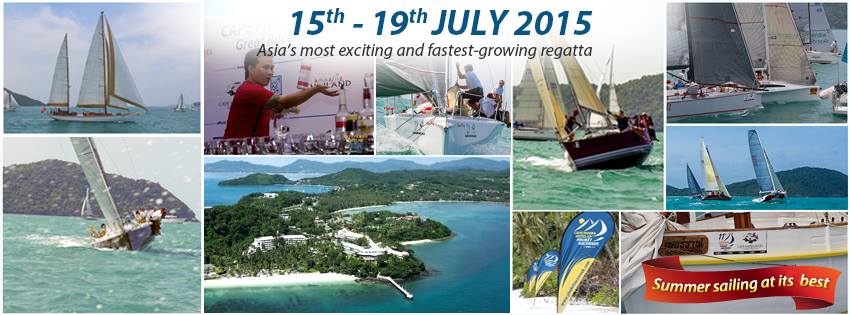
The Thai island of Phuket is preparing for an influx of visitors in July, as more than 500 sailors and spectators from around the world head to the Island to compete in the prestigious Cape Panwa Hotel Phuket Raceweek 2015, set to take place the 15th to 19th of July off Phuket’s southeast coast.

RACEWEEK

Now in its 12th year, Phuket Raceweek’s reputation overseas continues to grow as an increasing number of participants from all over the world fly in to take part and enjoy the beauty of Phuket’s Green Season.

“We are very pleased to see more international participants taking part in Phuket Raceweek each year. There is a large local fleet of boats for charter in Phuket and nearby, and as word continues to spread about Phuket’s stunning sailing grounds and Phuket Raceweek, we expect to see continued growth in the number of overseas sailors taking part,” said Mr. Byron Jones, Managing Director of organisers Media Business Services Co. Ltd. (MBS).

Equally important to overseas participants is the regatta shore venue and with the five-star Cape Panwa Hotel as title sponsor and host venue together with sister property Kantary Bay Hotel, Phuket Raceweek provides an idyllic beachfront venue and safe anchorage with onshore service second-to-none.

“Cape Panwa Hotel is an excellent host of Phuket Raceweek. With direct beachfront access sailors can anchor metres off in safety and enjoy the Regatta Village and social activities which are in the hotel’s gardens. The service is five-star, the parties are second-to-none and this has helped Raceweek win awards and set a new regatta standard,” added Jones.

Further underscoring their commitment to Cape Panwa Hotel Phuket Raceweek, this year will see Mr. Tirapongse Pangsrivongse, owner and CEO of the hotel’s owning group Cape & Kantary Hotels, competing on his newly acquired 12.8-metre boat, Kantus’ Bride.

“All of us at Cape Panwa Hotel are excited about Raceweek. It is truly a privilege to host such a prestigious event, and have an opportunity to meet such talented and driven sailors from around the globe. We can only hope that all of our guests enjoy our numerous restaurants, our secluded beach that is calm year round, and the lively parties that will be held during this year’s regatta. I have a personal stake in this year’s regatta, as I will participate on board my own yacht. I look forward to a spirited race, and may the best crew win,” said Mr. Tirapongse Pangsrivongse.

Phuket’s strategic central position and yachting hub status in Asia, combined with being home to some of the besthelped Raceweek win awards and set a new regatta standard, sailing grounds in the world – and the idyllic host venue of Cape Panwa Hotel – prime the event for further growth.

Often perceived as a niche sport, regattas in Thailand attract between 300 and 2,000 sailors and spectators to a destination for a week or longer, delivering revenue directly into the local economy through spend on accommodation, food and beverages, and entertainment.

Cape Panwa Hotel Phuket Raceweek is the opening event of the 2015/16 AsianYachting Grand Prix – a regional sailing championship that includes twelve of the best regattas in Asia. Organized by Media Business Services, the regatta consists of four days of world-class racing from 15th to 19th July off Phuket’s southeast coast.

For more information: www.phuketraceweek.com

Thailand positions itself as ‘Muslim-friendly destination’

Posted on June 8th, 2015

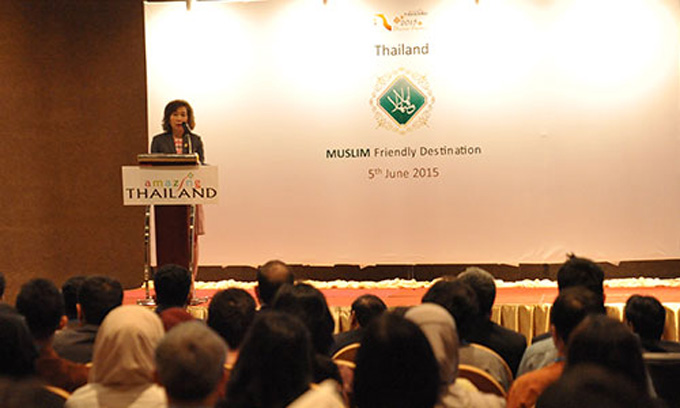
Thailand, the world’s tenth-most visited country that expects to welcome no less than 28mn foreign visitors this year, is positioning itself as a Muslim-friendly destination by pushing halal tourism and launching marketing incentives for Muslim-related agencies, the audience of this year’s Thailand Travel Mart Plus, a tourism conference and exhibition held on June 5 in Bangkok, learned.

Juthaporn-Rerngronasa

According to Juthaporn Rerngronasa, acting governor for International Marketing – Europe, Africa, Middle East and Americas of the Tourism Authority of Thailand (TAT), marketing for Thailand as a “Muslim-friendly destination” is a “pilot project to promote Muslim visitors to Thailand,” whereby the TAT “realises the potential and readiness of Thailand to promote this market.”

At the event, a lot of information about tourism products and services for the Muslim market was provided: On how tourism organisers and travel companies can adapt to the needs of Muslim travellers, for example by showing prominent Muslim landmarks or visiting Muslim communities in Thailand, by providing prayer rooms, halal restaurants and hotels, as well as other attractions tailored for this market segment, including shopping malls, amusement parks and theme parks.

There are also initiatives to promote halal tourism in Thailand’s southern Muslim provinces bordering Malaysia, as well as incentives for Muslim travel agents and media to survey tourism products and services for Muslim tourists in Pattaya, Hua Hin and Phuket, whereby Phuket is gearing up to be a halal food centre. And nearby Krabi province, little known for being a predominantly Muslim area, is positioning itself as a premier destination for Muslim travellers.

The TAT hopes to increase the proportion of Muslim travellers especially amongst the high-end and intermediate markets, as well as family and women groups. According to the MasterCard Crescent Rating Global Muslim Travel Index 2015, Thailand was ranked second within the most popular destinations for Muslim tourists from all over world (in the category of non-Muslim countries), behind Singapore and ahead of the UK.

The Muslim population in the Association of Southeast Asian Nations (Asean) is about 240mn, which is a huge and growing market for tourism, especially from Indonesia and Malaysia which are home to the majority of Muslims in the region. The potential is expected to rise further after the Asean Economic Community 2015 comes into effect as expected by the end of this year.

Beyond the region, the TAT focuses on source market such as the Gulf Cooperation Council, especially on the UAE, Kuwait, Qatar and Oman, as well as on Iran, Egypt, Morocco, Tunisia and Algeria.

Last December, the Halal Science Centre of Bangkok’s Chulalongkorn University, the Central Islamic Council of Thailand and Halal Standard Institute of Thailand joined forces and launched “Thailand Diamond Halal”, a brand concept under which all halal products and services sourced in Thailand will be marketed, including halal tourism and halal medical tourism.

According to Prof Dr Pakorn Priyakorn, director of the Halal Standard Institute of Thailand, the brand concept can be adopted by hospitality companies, hotels and tour operators and would ensure that, among other things, hotels would be equipped with prayer facilities including ablution rooms, prayer rugs, qibla direction, women’s prayer garment and restrooms with rinse spray hoses. Prayer rooms and related facilities should also be part of public places, such as shopping malls, theme parks, offices, highway rest stops and others. Tour operators should offer Islamic heritage tours and bespoke Muslim-friendly travel packages, also for special seasons and holidays such as Ramadan, Eid al-Fitr and Eid al-Adha. Hospitals catering to medical tourist should also provide Muslim-friendly facilities throughout the country under the halal branding, Priyakorn suggested.

To find all these places, a new smartphone application in both English and Thai – and Arabic and Bahasa Indonesia at a later point of time – will be available from June 22 for both Android and iOS systems for download from the TAT’s website (www.tourismthailand.org/muslimfriendly) or from App Store or Google Play, with which Muslim travellers can find halal restaurants and hotels, mosques and halal tour operators and can read news and a Thai guidebook, says Siripakorn Cheawsamoot, executive director of TAT’s Information Technology Office.

Tourism future is bright

Posted on June 5th, 2015

Tourism Authority of Thailand is confident that tourism will set new records this year making it possible to hit 28 million tourists and USD42 milion or THB1.14 trillion, up from 24.7 million in 2014.
bigbanner_discover

TAT acting governor, Juthaporn Rerngronasa, was commenting on the state of tourism on the opening day of the TTM B2B show that is now in is 14th consecutive year.

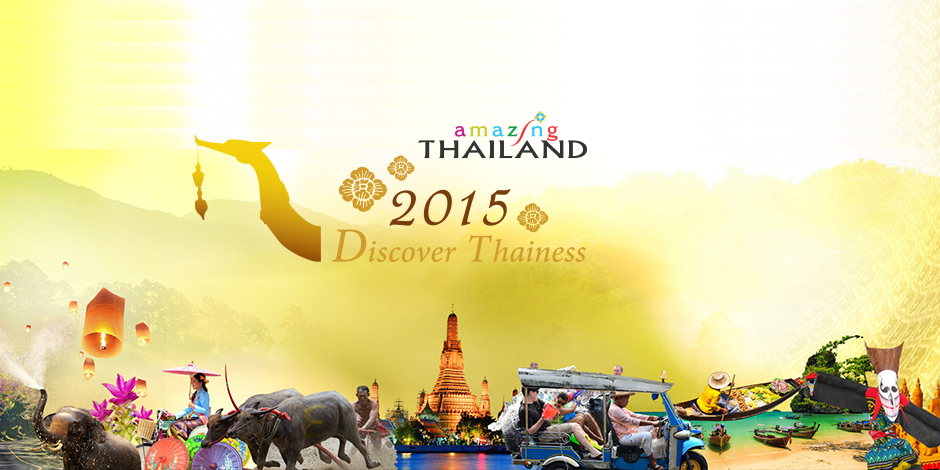
“The event has been buoyed by a remarkable revival in visitor arrivals, proving the success of the intensive recovery campaigns mounted after the political unrest of 2014 as well as the high-profile “2015 Discover Thainess” global marketing campaign that is now under way.”

She told a media briefing TTM broke all records with 374 sellers from Thailand and the Mekong countries and 323 buyers from 50 countries. These numbers are expected to increase further after the last-minute registrations that occurred on Thursday.

inside no 1According to the Ministry of Tourism and Sports, the preliminary figure of Thailand’s tourist arrivals from January to 25 May, 2015, touched 11.95 million (+19%), with a revenue of THB578 billion.

For January to March 2015, visitors from North East Asia totalled 3.07 million (+70%), ASEAN 1.86 million (+37%), the Americas 340,060 (+6.5%), South Asia 309,197 (+16.5%), and Middle East 154,656 (+26%).

Key European markets reported growth such as like Spain (+17%), Italy (+13%), Germany, and France (+7%), and UK (+2%).

In the first quarter of 2015, the top five source markets were China with 2.03 million visitors (+96%), Malaysia with around 890,000 visitors (+71%), South Korea with 370,000 visitors (+19%), Japan with 360,000 visitors (+17%), and Russia with 320,000 visitors (-53.77%).

Russia was one of the few markets that suffered a massive decline.

In 2015, TAT has set a target of 28 million visitors, generating around USD42 billion (THB1.4 trillion) in revenue. Last year, the kingdom attracted 24.7 million visits circulating THB1.14 trillion.

But the country has some catching up to do, first to pass the 2013 tourist arrivals peak of 26.55 million visits before it can really talk about successful recovery. However at the present performance level it is likely the 26.55 peak of 2013 will be passed by October.

China is key to recovery and this is reflected at the TTM. China had the largest delegation of buyers (42) followed by United Kingdom (29), Australia (20), India (18), the United States and South Africa (15). A group of smaller but high-quality buyers were invited from emerging markets such as, Bahrain, Belarus, and Bulgaria. Of these 44.89% or 178 are repeat and 145 are first-time buyers.

Amongst the sellers, 21% or 80 organisations were first timers to give maximum opportunity for an emerging range new products and services.
For the first time at TTM, TAT organised a “Muslim Friendly Destination Mega FAM Trip” by inviting about 100 travel agents and media from Islamic countries to the show.

TAT will also launch the “Thailand Muslim Friendly Destination” mobile apps (I os and android) and a mini website of tourism information for the Muslim market such as, Thailand’s halal restaurants and hotels. This app will be in both Thai and English with Arabic to be added later.

“There are dozens of Islamic restaurants all over Thailand, which have received the Halal Tourism Certificate,” the acting governor said.

Phuket is gearing up to be a Halal food centre. Muslims make up about 30% of Phuket’s population, It already welcomes around 100,000 Arab tourists each year.

TAT also forecasts that in the near future Thailand’s Andaman coast from Phuket south to Trang will become one of the top destinations for Arab visitors due to the high density of Muslim villages. The availability of Halal food restaurants at resorts such as Krabi, Lanta Island and Trang will certainly be a key factor.

To prepare for the ASEAN integrated community in 2015, the TAT is launching is a campaign called ASEAN Connect Tourism. This will feature a suggested tour itinerary “connecting” Thailand Myanmar, Cambodia, Laos, and Vietnam.


Bangkok remains 2nd top global city destination, 1st in Asia-Pacific, says MasterCard index

Posted on June 4th, 2015

For the second year in a row, Bangkok is predicted to be the world’s second top destination, and the number one in Asia-Pacific, with 18.24 million visitors expected to spend time in the Thai capital in 2015, according to the newly-released MasterCard Global Destinations Cities Index. London ranked top city for the world with 18.82 million visitors.

MasterCard-Global-Destination-City-Index-2015-570x321

Mrs. Juthaporn Rerngronasa, Acting Governor and Deputy Governor for International Marketing – Europe, Africa, Middle East and Americas, the Tourism Authority of Thailand (TAT) said, “This is absolutely great news, which could not come at any better time than now that Thailand is seeing a strong recovery in all tourist markets. I’d like to thank all concerned parties and stakeholders for their tireless efforts in building and reiterating the image of Bangkok, Thailand’s main gateway, as one of the world’s most popular tourist cities that is complete with both modern conveniences and old charms.

The MasterCard Global Destinations Cities Index provides a ranking of the 132 most visited cities from around the world in terms of international overnight visitor arrivals and spending. On the global scale for 2015, Paris ranked third with 16.06 million visitors, Dubai came fourth with 14.26 million visitors, and Istanbul was in fifth place with 12.56 million visitors.

When comparing among destination cities in the Asia-Pacific, Bangkok retained its position at number one, followed by Singapore, Kuala Lumpur, Seoul, and Hong Kong. This ranking has remained unchanged since 2013 when the Thai capital became the first Asian city to top the global list.

In terms of spending, Bangkok ranked seventh in the world and third in the Asia-Pacific, with US$12.36 billion projected in international visitor expenditure for 2015.

Mrs. Juthaporn said, “This ranking as well as a number of awards and honours that Thailand and various Thai destinations, including Bangkok, have received so far this year will certainly motivate us to work harder to welcome tourists. Under our 2015 Discover Thainess campaign, we hope to share with all our international guests the Thai way of happiness through the various aspects of Thainess; such as, Thai food, Thai arts, Thai wellness, and Thai festivities.

Thailand expects to welcome a total of 28 million visitors generating an estimated US$ 42 billion (1.4 trillion Baht) in 2015.