This site uses cookies, as explained in our Privacy & Cookie Policy. If you use this site without adjusting your cookies settings, you agree to our use of cookies.
I Agree

Kazakhstan’s Air Astana spreads wings in Thailand

Posted on August 20th, 2015

Kazakhstan’s national carrier, Air Astana, has expanded its route map in Thailand with the signing of a new codeshare agreement with Bangkok Airways.

getasset.aspx

The new deal will enable Air Astana’s passengers to connect from Bangkok to Koh Samui, Phuket and Krabi, using Bangkok Airways’ services. Air Astana currently flies to Bangkok from both Astana and Almaty.

“Bangkok Airways has grown to become a highly respected Asian carrier with a comprehensive network throughout the region,” said Air Astana’s president, Peter Foster. “As a similarly high quality airline Air Astana is delighted with a codeshare agreement, which will significantly enhance the links between our two regions.”

All Air Astana passengers connecting to Bangkok Airways flights will receive their boarding passes on check-in at their first international departure point.

For Bangkok Airways, the arrangement continues its codeshare strategy; the airline now partners with 19 other airlines including British Airways, Cathay Pacific, Emirates, Etihad, Qatar Airways and JAL.

Emirates adds more flights to Phuket

Posted on August 17th, 2015

Dubai-based Emirates has announced that it will add four more weekly flights to Phuket, significantly increasing capacity on the route.

Phuket-1_tcm275-2256632

The new flights will begin from December 1, 2015 and will increase capacity by 57 per cent, the airline said in a statement. All flights will be operated by a Boeing 777-300ER.

The airline’s expansion comes as Phuket emerges as a popular tourist destination. The island received about six million visitors in the first five months of 2015, estimates suggest.

Emirates’ executive vice president and chief commercial officer Thierry Antinori said that Phuket has been a successful route ever since its launch in 2012.

The airline has been ramping up the number of flight offerings to Asia, an attractive market for passengers that Emirates connects from Europe and the US.

Earlier this month, Emirates inked a codeshare deal with Bangkok Airways in order to expand its network in Southeast Asia.

The deal will see Emirates add its code to 19 Bangkok Airways routes across Southeast Asian cities.

It will also add 14 more cities to the Dubai-owned carrier’s network, allowing it to connect passengers to new tourist destinations such as Koh Samui and Chiang Mai in Thailand, Siem Reap in Cambodia, and Yangon and Mandalay in Myanmar.

Bangkok Airways operates 31 routes to 24 Asian airports and will help connect Emirates passengers to 104 destinations in Asia Pacific.

In June, Emirates also started a new daily service to Bali in Indonesia, providing a significant boost to its network in the Asia Pacific region.

Emirates, which was launched in 1985, has flourished over the last decade as it capitalised on Dubai’s location and the emirate’s economic ambitions.

The airline has continued its growth by expanding its network, mainly through extensive codeshare deals with other regional airlines and by deploying aircraft such as A380 and Boeing 777-300ER on its existing routes.

China drives Thai tourism rebound in first half

Posted on August 12th, 2015

Thailand has experienced a surge of visitors from mainland China in the first half of 2015, driving the country’s tourism recovery.

Chinese-tourists-in-Krabi-e1439347818128

According to the latest data released by the Thai Ministry of Tourism & Sports, more than four million Chinese visitors travelled to Thailand in the first six months of the year, up 111.6% year-on-year, although this was in comparison to a poor first half in 2014. Spending by Chinese visitors jumped 138.9% to THB190.92 billion (US$5.4bn).

This makes China by the far the largest source market for Thailand, both in terms of arrivals and receipts.

Thailand suffered a troubled 2014, as street protests, a military coup and martial law contributed to a sharp decline in visitor arrivals. But the country appears to be rebounding strongly in 2015, with overseas arrivals climbing 29.5% the first half of 2015 and tourism receipts increasing 29.7%.

Following China, Malaysia (+57.9% to 1.7m), Japan (+16.8% to 675,800), South Korea (+19.7% to 638,300) and Laos (+20.7% to 565,600) were Thailand’s other top source markets in the first half. Indian arrivals also saw double-digit growth (+17.0% to 526,100), while Russia was the country’s largest European source market, despite a 50.4% slump in visitor numbers, to 466,500).

Arrivals from the UK increased 2.7% to 462,600 and US visitor numbers climbed 12.2% to 427,000.

In terms of tourism receipts, Malaysia (+64.6% to THB39.8bn), the UK (+4.6% to THB32.5bn), Russia (-50.4% to THB31.8bn) and the US (+15.8% to THB29.9bn) followed China as Thailand’s other top spenders.

For the full year, Thailand is targeting 28.8m visitor arrivals and THB1.4 trillion in tourism revenues.

The country recently announced plans to attract more “quality” visitors, with a higher average expenditure and longer length-of-stay.

Pattaya Takes On Phuket’s Volume Market

Posted on August 10th, 2015

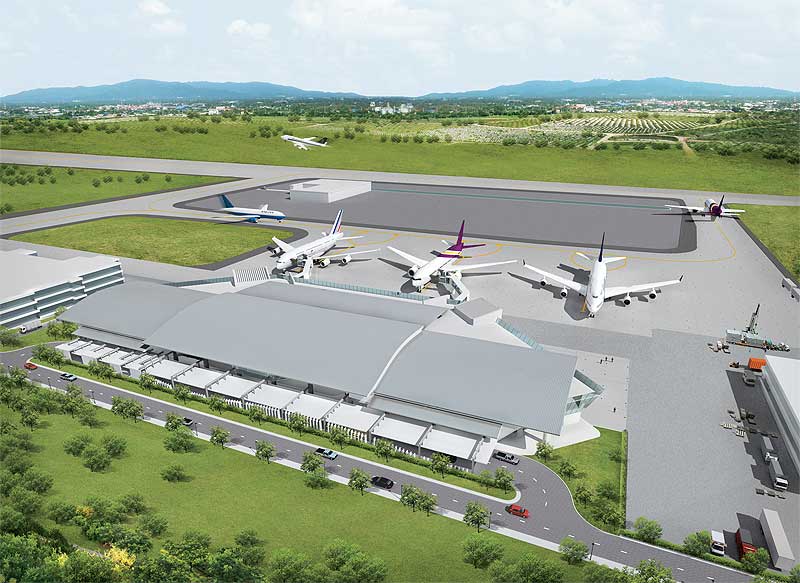
One lead indicator for any leisure destination remains airlift and Pattaya has received a substantial boost of good news on the current redevelopment and expansion of U-Tapao Airport.

phu01080756p1

AirAsia has been quick to assume a key role triggering new service between Kuala Lumpur and the Eastern Seaboard.

Thai AirAsia has unveiled plans to use U-Tapao as a secondary hub, while positioning aircraft and looking at new short haul international routes.

For China travelers the proximity is a key factor and Pattaya is expected to key into the Mainland segment after the sharp decrease in Russian arrivals over the past year.

Emirates expands Asian connectivity with Bangkok Airways

Posted on August 7th, 2015

Emirates has significantly expanded its network in Southeast Asia with the signing of a codeshare partnership with Bangkok Airways.

c1_645732_150806064814_620x413

Under the agreement, Emirates’ international passengers will be able to connect to 19 routes in Southeast Asia, bringing 14 new destinations Dubai-based airline. Emirates will place its ‘EK’ code on Bangkok Airways’ routes to a number of Southeast Asian destinations, including Koh Samui, Chiang Mai, Chiang Rai, Krabi, Trat, Sukhothai, Siem Reap, Yangon and Mandalay.

Passengers travelling with Emirates from Dubai to Bangkok, Phuket, Kuala Lumpur and Singapore will be able connect to Bangkok Airways’ flights.

“Our new codeshare agreement with Bangkok Airways will provide our passengers with increased choice, flexibility and ease of connection to different cities across Southeast Asia to and from Dubai, ultimately offering a smoother, more convenient travel experience,” said Thierry Antinori, Emirates’ executive vice president & chief commercial officer.

“Emirates already offers six daily services to Bangkok, and from December, four of these services will be operated by our flagship A380 aircraft. This provides many options to connect to the region as part of our new codeshare.”

Bangkok Airways’ senior vice president of network management, Peter Wiesner, called the codeshare agreement “another important milestone and an exciting development in the continued growth of Bangkok Airways”.

Bangkok Airways operates 31 routes to 24 Asian airports. All Emirates’ passengers on Bangkok Airways flights will receive all their boarding passes on check-in at their first international departure point.

New B300mn Phuket mall to open in January

Posted on August 4th, 2015

A new shopping mall on Phuket’s bypass road consting upward of B300 million is slated to open in January, bringing to the island the first “drive-thru” range of outlets, among 400 variety boutique stalls.

1438658367_1-org

Workers broke ground at the site of the Bukis Phuket Mall, located on nine rai between Central Festival Phuket and the Big C shopping centre on the bypass road, on June 24.

“Bukis Phuket is the first street-style shopping complex that reflects Phuket’s direction of retail markets,” said Chairat Meepremwattana, Executive Director of project developer Multi Property Development Co Ltd.

“It will be a hub for local vendors, fashion, food and entertainment for Phuketians and tourists. A destination for those who would like to explore the local lifestyle and its culture.”

Total investment in the project is estimated at “about B300-400 million”.

“The outdoor shopping complex will have more than 400 variety stores, including speciality shops, to satisfy all customers,” said fellow Executive Director Somchai Meepremwattana.

“We are pushing it to be the ‘Heart of Phuket’, where people of any ages or groups can come and enjoy.”

The centre will be divided into four major zones: food court, drive-through service, shops and events.

“It will be the first shopping complex in Phuket to have many drive-through services that will be open 24 hours, with fast-food restaurants such as McDonald’s and KFC taking part in this new venue,” said Mr Chairat.

Parking spaces provided on site will accommodate more than 400 vehicles and 500 motorcycles.

“There will also be a special area reserved where entertainment, promotional events and concert can be held,” Mr Chairat added.

“We welcome all sort of stores such as local fashion shops, food stalls, restaurants, local service providers, and drive through services and we are interesting to see many stores offer wide range of interesting products at affordable prices. Mr Chairat said

Mr Chairat declined to cite shop unit rental rates, details about the source of funding or the rate of return on investment through the expected revenue generated through outlets at the mall in the opening year, but he said he has good faith the project will be a resounding success.

“We have been in the retail business for the past 20 years,” he noted. “We are working closely with our business associates – design company DC NINE Co Ltd, construction consultant CL Management, and contractor SSS&P Engineering Supply Co Ltd – in developing this project.

“Construction started on June 24 and is expected to be completed by January 2016 or earlier, and it is too early to estimate how long it will take [to recover investment outlay]or how much we will get back from this investment.”

Thailand tourism witnesses positive growth

Posted on August 3rd, 2015

In light of the Green Season, Thailand tourism recently welcomed its 17th millionth visitor for this year – Al Shaqsi Yaqdhan Hamad Khalifa from Oman.

17

As part of the special theme, every millionth visitor to the country is being welcomed at Thailand’s international aviation gateways until 30 September 2015.

The activity is designed to support the ‘2015 Discover Thainess’ umbrella campaign, which aims to highlight Thailand and its diversity, flavours of Thai cuisine, uniqueness of the traditions and culture, as well as friendliness of its people.

As per preliminary figures released by the Ministry of Tourism and Sports, Thailand welcomed a total of 15.81 million visitors between January to 12 July 2015, a 30.31% increase over the same period of 2014. This generated tourism income of 741.12 billion Baht, a 30.43% growth over the same period of last year. TAT is projecting 28.8 m visitors in 2015.

Commemorating the Lord Buddha

Posted on July 30th, 2015

The end of this month celebrates two big Buddhist holy days, Asarnha Bucha (July 30) and Wan Khao Phansa (July 31), a Buddhist holy day which begins on the first full moon of the eighth lunar month, and this year it falls on today (July 30).

1438225677_1-org

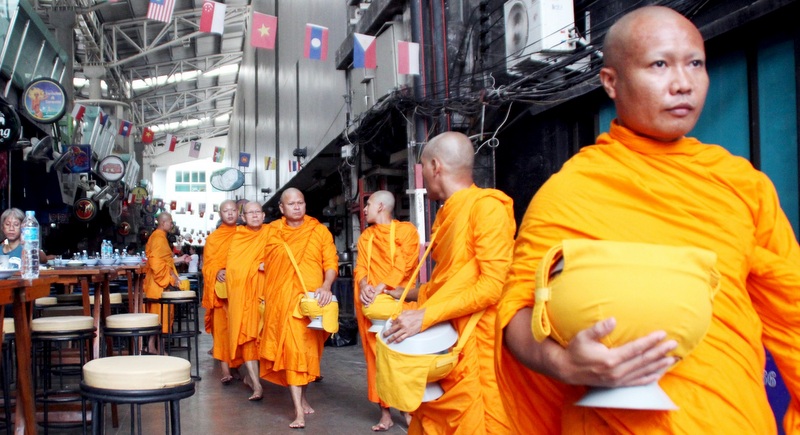
Asarnha Bucha Day commemorates the day, over 2,500 years ago, that Lord Buddha gave his first sermon to his first five disciples at a place called the Deer Park in Benares, today also known as the holy city of India.

Each year on Asarnha Bucha Day, ceremonies are held in Buddhist temples throughout Thailand, where elaborate wax candles are lit and kept burning throughout Buddhist Lent. The day involves donating offerings to temples, giving alms to monks and listening to sermons.

In the evening Buddhists join the candle procession known to Thais as Wien Tien, where the faithful walk with a lit candle clockwise around the temple three times to symbolise the three jewels (Buddha, Dharma, and Sangha) of Buddhism and pray for blessings.

Asarnha Bucha is also considered the most popular day for many young men to enter monkshood to honour their parents, as the following day is the Buddhist Lent day or Wan Khao Phansa, also known as the Theravada rains retreat.

Phansa in Thai means three months, while Khao is to enter or take part in a particular activity.

Starting on this day, Thai monks will remain in the temples and avoid unnecessary travel for three consecutive lunar months during the rainy season, for fear that they might accidentally step on young plants or tiny animals.

It is also a time for senior monks to teach newly ordained monks Buddhist teachings. It’s the time for all Buddhist monks to study and absorb the Dharma (teaching) of Buddhism.

Khao Phansa is also considered the time for merit making and many of the faithful will also try to strictly take part in the five precepts during this period.

During these holy days, the Thai government encourage locals to take part in its “Ngod Lao Khao Phansa” (no drinking alcohol campaign, since avoiding intoxicants such as alcohol is one of the five precepts). Alcohol sales are strictly prohibited during both of these holidays.

Tourists are invited to join the locals for the beautiful Wein Tien ceremony at a Wat in your area and are encouraged to join the “Ngod Lao Khao Phansa” campaign.

All government offices are closed today and tomorrow in honour of the two major holidays. For a list of what’s open and what’s not, click here.

Meanwhile, all bars, restaurants and entertainment venues are required by law to not sell alcohol.

Phuket tourist arrivals keep on rising

Posted on July 28th, 2015

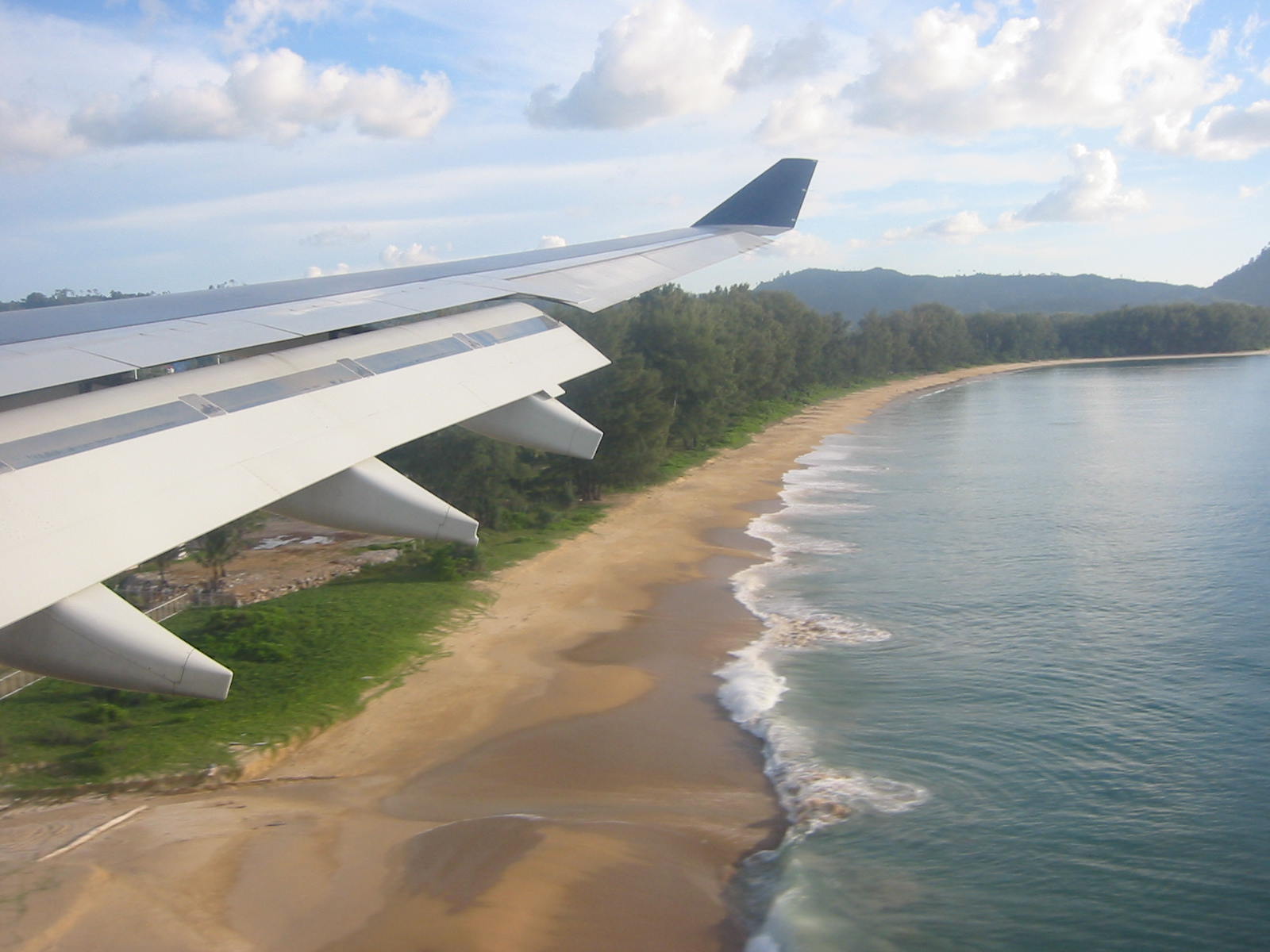
AoT this past week reported that all of its supervised airports handled 8,044,421 passengers up 37.79 per cent from 5,838,276 during the same month last year.
2002-11-12.-The-beach-of-Phuket-Airport-thailand

Overall aircraft movements also increased by 25.33pc from 45,189 to 56,636.

During the first six months of the year, the country main gateway Bangkok’s Suvarnabhumi airport welcomed 26.75 million passengers followed by Don Mueang with 14.43mn and Phuket 6.43mn. Chiang Mai Airport handled 4.04mn passengers.

Suvarnabhumi Airport registered an increase of 22.12pc in international aircraft movements from 16,055 to 19,607, while domestic movements increased by just 2.75pc from 5,241 to 5,385 movements.

International passenger traffic increased 37.54pc from 2,406,987 to 3,310,668, while domestic passengers increased 8.30pc from 534,139 to 578,457. Overall, it accounted for a 32.23pc increase in passengers from 2,941,126 to 3,889,125.

The second aviation gateway, Don Mueang Airport recorded a 49.70pc increase of international aircraft movement from 3,294 to 4,931. Domestic movement posted a 42.21pc improvement from 8,739 to 12,428.

International passenger traffic increased 85.61pc from 381,988 to 709,013, while domestic passengers increased 47.95pc from 1,060,661 to 1,569,259.

Chiang Mai International Airport continued to show growth in June. Both international and domestic aircraft movements registered double-digit increases of 39.10pc (913 to 1,270) and 34.91pc (2,724 to 3,675).

International passenger traffic grew 78.89pc from 84,809 to 151,716, while domestic traffic gained 32.35pc from 344,953 to 456,535.

Phuket International Airport registered an increase of 11.23pc in international aircraft movements from 2,886 to 3,210, while domestic aircraft movements improved 20.98pc from 2,674 to 3,235.

International passenger traffic increased 21.15pc from 387,140 to 469,006, while domestic improved 29.95pc from 303,172 to 393,983.

Chiang Rai International Airport reported an increase in aircraft movements of 20.99pc from 786 to 951, while passenger traffic grew 38.87pc from 87,433 to 121,420.

Hat Yai International Airport reported an overall aircraft movement increased 3.57pc from 1,877 to 1,944 in June. Meanwhile, overall passenger traffic registered a 15.13pc growth from 246,855 to 284,364 passengers.


Millennials drive surge in China’s outbound travel

Posted on July 24th, 2015

THE NUMBER of outbound Chinese travellers is predicted to reach 174 million by 2019, with an expected expenditure of US$264 million, boosted by the rising number of tech-savvy, younger, and more affluent Chinese.

IMG_2445

According to the latest Chinese International Travel Monitor (CITM) 2015 report by Hotels.com, more than 107 million Chinese made outbound trips last year, a 20 per cent rise on 2013.

This yearly CITM report, which includes interviews with more than 3,000 Chinese outbound travellers and 1,500 hotel operators worldwide, revealed that nearly 60 per cent of hotels said the number of Chinese tourists aged between 18 and 35 has risen and that the trend will continue.

Speaking to TTG Asia e-Daily yesterday, Katherine Cole, regional director of Hotels.com, said: “This growth is especially strong in the Asia-Pacific region, where 78 per cent of hoteliers reported an increase in Chinese Millennial travellers.”

The study also revealed that young tourists were less dependent on travel agencies than their older counterparts, and mobile travel bookings are “soaring” with 50 per cent of all Chinese outbound travellers using their mobile phones to plan and book trips compared with just 17 per cent last year.

Highlightling this growth as one of the key findings in the report, Cole said: “This is a huge jump as we see that travellers are relying a lot on their mobile devices because of how convenient and consistent it is.”

“It also works because the companies are providing better tools and anyone can make a booking within seconds,” she added.

The continuous growth in outbound travel by the Chinese has presented huge opportunities to the global tourism industry and hoteliers.

To leverage this growth, Cole said: “To keep up with the growth opportunity, hoteliers have to accommodate the needs of Chinese travellers with demands like free Wi-Fi which is a must-have, and also things like providing a kettle in the room and also Chinese-speaking staff.”